What is a zero-point clamping system, and how does it work?
A zero-point clamping system is a workholding standard built around a fixed, repeatable interface between the machine table and every fixture, pallet, or vise used in production. Instead of clamping a workpiece or fixture directly to the machine table and then probing for its position, the operator drops it onto a standardised receiver plate, and the system locates it mechanically, to a repeatability of a few micrometres, every time.
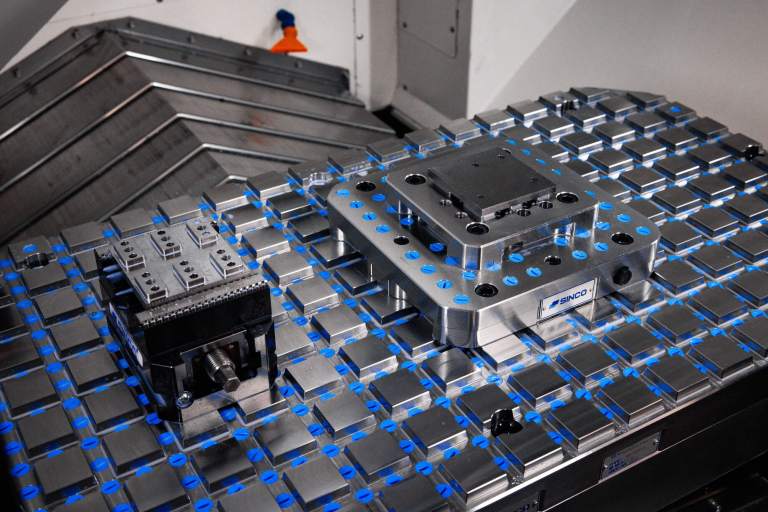
The mechanism is a set of conical locating slots in a base plate that accept matching nipples or pins on the underside of any fixture or pallet built to the same standard. When the fixture is loaded, it self-locates in X, Y, and Z simultaneously. On manual systems, M12 clamping screws lock it in place with up to 65kN of force per screw. On pneumatic systems, the clamping is automatic, triggered by the machine or an external signal. Either way, the operator does not probe for zero. The system defines it.
The practical consequence is that any fixture built to the standard can be removed, stored, and returned to any machine using the same base plate, in the same position, with no re-referencing required. That portability of the reference point is what distinguishes a zero-point clamping system from conventional workholding. It is not simply a faster way to clamp a part. It is a structural change in how position information is preserved and transferred across a production process.
Zero point workholding is a system in which every CNC fixture, vise, or pallet locates to a common receiver plate at a mechanically defined reference position, eliminating the need to probe for zero each time a part or fixture is loaded. The term refers both to the concept and to the category of products (base plates, pallets, modular vises) that implement it.
High-quality zero-point clamping systems achieve repeatability of ≤5μm. The SINCO MultiZero zero-point clamping system is rated at 5μm across all pallet changes and machine transfers, meaning a fixture returned to the base plate after weeks in storage will locate within 5μm of its original position without any adjustment.
Yes, 5-axis workholding is one of the primary applications. The high clamping force (up to 260kN with four screws) and vibration-free lateral force absorption make the system stable under the cutting forces generated during simultaneous 5-axis machining. Risers and angled fixtures built to the MultiZero standard extend the clamping options further for complex geometries.
Setup time is reduced in two ways. First, fixtures are assembled and zero-referenced offline, while the previous job is still running, so the machine transition takes seconds rather than minutes. Second, because the system mechanically defines the reference position, the operator does not run a verification cut or probe cycle after loading. The machine confirms position and starts cutting immediately.
That is its core purpose. When identical base plates are installed across multiple machines, milling centres, EDM machines, CMMs, any fixture or pallet built to the standard is immediately compatible with all of them. A job can move from one machine to another without rebuilding the setup. This is what makes zero point workholding a production architecture decision rather than just a hardware purchase.

The hidden cost of conventional workholding
Most shops can tell you their machine utilisation rate. Fewer can tell you how much time is lost between operations, not in the machines themselves, but in the transitions. A part finishes milling and moves to EDM. Before the EDM operator can start, they need to find where zero is. That takes 20 minutes. Then the part goes to the CMM. The measurement operator re-establishes reference again. If a correction is needed and the part returns to milling, the milling operator starts the same process over.
None of that time appears as downtime in a utilisation report. The machines were not running, but no one was waiting for the machines, they were waiting for someone to re-establish where the workpiece was. In a shop running 10 or 15 jobs simultaneously across three or four process stages, that invisible re-referencing time accumulates into hours per week, per machine, that are genuinely unaccounted for.
The industry response to this has focused on the machines themselves, faster spindles, tighter tool tolerances, more capable CAM software. Those investments are real and they matter. But they address what happens inside a single operation. The time lost between operations, in the handoffs, in the re-referencing, in the “where was zero on this job” conversations, that layer has largely been left untouched.
The reason is structural. Each machine has its own coordinate origin. Each operator establishes their own reference. Each process stage starts from scratch. Until that underlying structure changes, optimising the individual steps produces diminishing returns, because the constraint is not the steps, it is the connections between them.
A machine that runs at 90% spindle utilisation means nothing if the setup before it costs two hours and the measurement after it means starting over.
What a common workholding standard actually means in practice
Think about what happens when a new job arrives in a shop without a standardised clamping system. The programmer writes the toolpaths. The operator receives the job and decides how to hold the part, often based on what fixtures are available that day, not on what was used last time. If the same part runs again in three months, that decision gets made again, possibly differently. The program may need adjusting. The setup time is whatever it takes to figure it out again.
Now think about what a permanent, shared reference changes. The first time the part runs, the fixture is documented, which vise, which position on the base plate, which zero offset. The second time, the operator pulls up the setup sheet and mounts the same fixture in the same position. The program runs without modification. The machine does not wait while anything is figured out.
That is what a production architecture means in practice. Not a concept, a repeatable set of physical rules that every machine, every operator, and every job follows. Structured clamping is the mechanism that makes those rules physical rather than theoretical.
Three things that change when you standardise your CNC workholding
Shops that have implemented a structured clamping system consistently report the same surprises, not about the system itself, but about where the time actually was. The setup time reduction is expected. What is not expected is how far the effects reach into other parts of the process.
Because every fixture position on the base plate is fixed and documented, the CAM programmer can define the setup before the job reaches the machine, not at it. The operator arrives with a pre-assembled fixture and a verified program. The machine transition from the previous job takes minutes.
A part on a MultiZero pallet carries its zero-point position with it. When it moves from the milling machine to EDM, the EDM operator does not probe for reference, they load the pallet and start. The same is true at the CMM, and again if the part comes back for rework.
In a conventional setup, an experienced machinist and a junior operator will establish zero slightly differently. Over a production run, that difference shows up in part variation. When the system defines the reference mechanically, at 5μm repeatability, the result is the same regardless of who mounts the fixture or which shift it runs on.
Manufacturing standardization: what it looks like at the machine level
Manufacturing standardization in workholding means something specific that is worth stating plainly: when MultiZero Base Plates are installed across multiple machines, any CNC fixture built for one machine runs on another without modification. The grid pitch, the slot geometry, the clamping interface, all identical. A vise positioned at a known location on Machine A sits in the same location on Machine B.
The practical consequence is that fixtures stop being machine-specific assets. A shop with two milling machines no longer needs two separate fixture sets for the same family of parts. When one machine is occupied, the job moves to the other without a re-setup cycle. When demand increases and a third machine is added, it joins the same modular workholding system, every fixture already in the shop is immediately compatible.
Over time, this compounds. Each documented setup becomes a reusable asset. Each program written for a standardised workholding configuration runs again without modification when that part is re-ordered. The shop builds a library of verified setups rather than solving the same problem repeatedly, which is the practical definition of lean manufacturing applied at the clamping level.
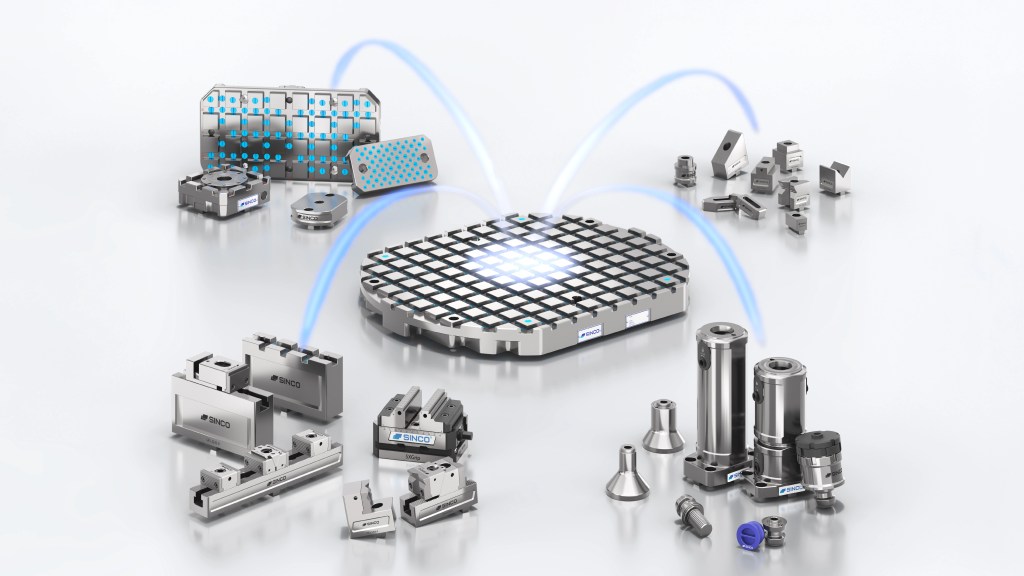
The common interface layer across your machines. Available in P50 and P100 grid pitch configurations, the MultiZero Base Plate defines the standard reference that all workholding elements, fixtures, and pallets connect to, consistently, across every setup.
View Base Plate options →Production efficiency: what actually happens to machine setup time
The standard case for a zero-point clamping system focuses on machine setup time reduction, and the numbers are real. But setup time is only part of what changes, and often not the largest part.
Consider what a typical job changeover involves without a quick-change workholding system. The previous part finishes. The operator removes the fixture, locates the next one, torques it down, probes for zero, runs a verification cut, and adjusts if needed. During all of that, the spindle is not running. In a shop with two or three changeovers per shift per machine, that idle time adds up to a significant portion of available spindle hours.
With a pallet-based workholding solution, the next fixture is assembled and zero-referenced externally, on a bench, while the current part is still being machined. When the machine is ready, the pallet drops in. The spindle is cutting again in under a minute. The machine does not wait for the setup; the setup waits for the machine.
SINCO customers running the MultiZero zero-point clamping system across their production floors have reported productivity increases of 30 to 40 percent within six months of full implementation, with projected gains reaching 50 to 60 percent as standardised workflows mature across more job families.
The 5μm repeatability figure matters here in a specific way: it means the pallet swap does not introduce positioning error that requires a verification cut. The machine confirms the position and starts cutting. That alone, eliminating the verification cut on each changeover, recovers meaningful time across a full production week.
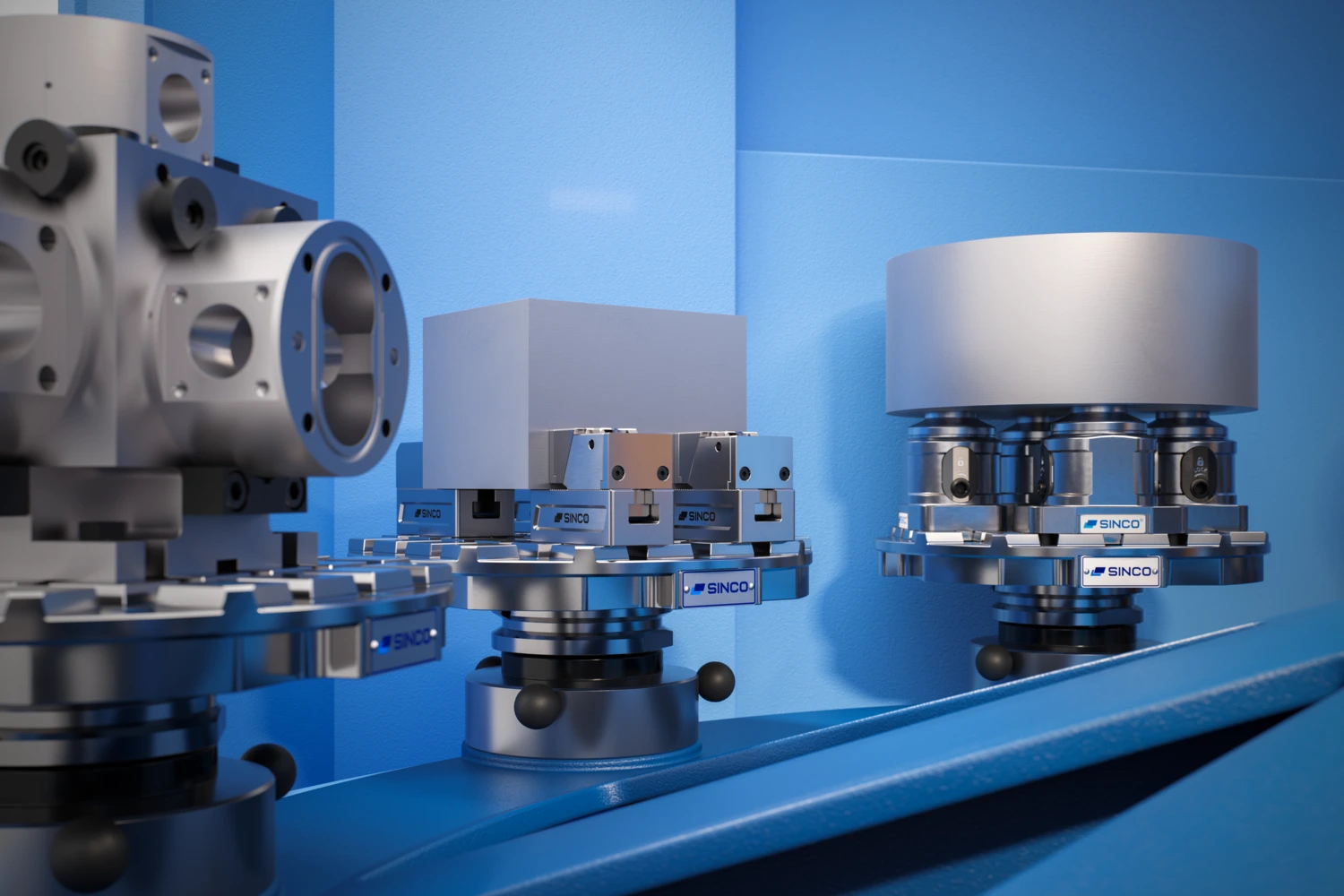
Clamp outside the machine, swap in seconds, transfer between operations without losing the reference. The MultiZero Pallet replicates the full flexibility of the Base Plate in a portable format, enabling parallel preparation and true offline setup.
Explore the Pallet range →Zero point workholding as a process connector across milling, EDM, and CMM
The re-referencing problem described in the introduction, the 20-minute probe cycle every time a part moves to a new machine, is not a small inefficiency. In a complex part that goes through four process stages, that cost is paid four times. And each re-referencing introduces a small margin of positioning error that did not exist before.
When a part is mounted on a MultiZero pallet at the start of its production journey, that pallet becomes its reference carrier. At the milling machine, the pallet locates to the base plate. At the sink EDM, same pallet, same locating interface, same zero. At the CMM, the part arrives in a known position without any probing required for reference. If a measurement finding sends it back for rework, it returns to the milling machine on the same pallet, the operator loads it, calls up the original program, and makes the correction. No re-referencing. No offset adjustment. No verification cut.
The time saving per operation transfer is 15 to 20 minutes in a typical precision machining environment. Across a complex part with four operations and a rework cycle, that is over an hour recovered on a single job, before counting the reduction in positioning error between stages.

How MultiZero supports 5-axis workholding and multi-operation machining
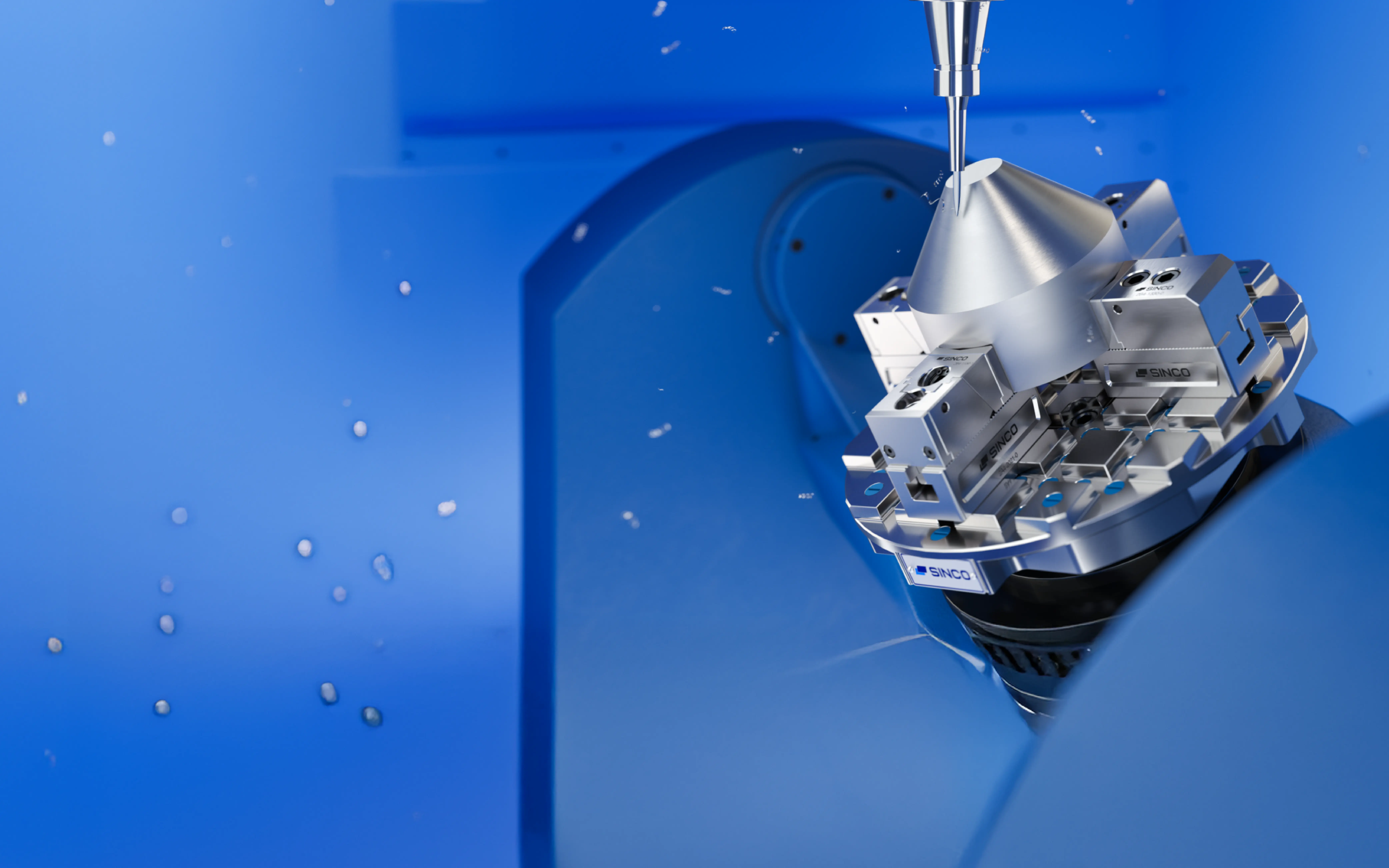
5-axis workholding introduces a specific challenge that zero point workholding addresses directly. In simultaneous 5-axis machining, the cutting forces change direction continuously as the part rotates. A clamping system that allows any lateral movement under those forces will produce geometry errors that compound through the operation. The MultiZero base plate absorbs lateral forces through the conical slot interface, not through friction or bolt tension, which is why it maintains stable positioning under the dynamic load conditions of 5-axis machining.
Beyond the clamping force itself, the modular workholding system allows risers, angled plates, and extension elements to be combined on the same base plate interface. A complex aerospace component requiring access to five faces in a single setup can be elevated on a MultiZero Riser to clear the machine table, clamped with a centric vise for parallel jaw force, and fixtured with support elements under thin sections, all within the same standardised grid, all locating to the same zero reference.
Mould and die production is where the multi-operation story plays out most completely. A core insert starts as a steel block on a 5-axis milling machine. After roughing and semi-finishing, it moves to a sink EDM for cavity work. From there it goes to a CMM for dimensional verification. If the cavity geometry is within tolerance, it proceeds to surface finishing. If not, it goes back to EDM for correction.
In a conventional workflow, every one of those transitions involves re-establishing the workpiece position. The EDM operator sets up a new datum. The CMM operator probes reference points. The EDM operator, receiving a returned part for correction, sets up again. Each of these cycles takes time and introduces the possibility of a positioning offset that was not present before the transfer.
On a MultiZero pallet, the block is fixtured once, at the start. Every subsequent machine sees the same pallet, locating to the same interface, returning the same zero position within 5μm. The EDM program runs from the same origin as the milling program. The CMM does not need to probe for reference. A correction at EDM uses the same datum the original operation used. The part arrives at each stage in a known state, not a re-established one.
Modular vises, risers, support elements, centric clamping vises, clamps, adapter plates, the full workholding portfolio that connects any workpiece geometry to the MultiZero reference grid. Hundreds of configuration combinations. One interface standard.
Browse all Workholding →Flexibility and modularity: how workholding solutions scale with production
The most practical starting point is a single machine and a single job family. Fit a MultiZero Base Plate to the machine table. Identify the three or four part families that run most frequently and build fixtures for them on the standard interface. Document the setup, fixture position, zero offset, program number. Run those jobs for a month and track what changes in setup time and changeover frequency.
That single machine becomes the proof of concept internally. The setup documents it generates are reusable assets, not just for that machine, but for the next one, because the interface is identical. When a second machine is equipped with the same base plate, every fixture built for the first machine is immediately compatible. No modification, no new setup sheets, no re-proving programs.
The pallet system comes next, typically when changeover frequency between jobs is high enough that offline setup preparation becomes valuable. At that point, the operator is assembling the next fixture while the machine is still cutting. The Pneumatic Pallet extends this further, enabling automated loading without changing the clamping interface or invalidating any of the setups already built on the manual system.
The practical implication of that last point is worth stating directly: the decisions made when equipping the first machine determine what the automation system will be compatible with later. A shop that starts with a proprietary or ad-hoc fixture system and later wants to automate faces a re-tooling cost. A shop that starts with MultiZero does not, the automation runs on the same interface the manual operation already uses.
The complete SINCO product portfolio, all workholding families, base plates, pallet systems, and accessories, with technical specifications and configuration guidance. Download free, no registration required.
Download the Catalogue →Digital integration: planning CNC fixtures before the machine is involved
There is a moment in most production planning workflows where the digital world ends and the physical world takes over, abruptly. The part has been designed in CAD. The toolpaths have been defined in CAM. And then, at the machine, someone figures out how to hold it.
That disconnection is not inevitable. It is a consequence of clamping being treated as a shop floor problem rather than a design-stage decision.
A structured clamping system changes that relationship at the root. Because the interface is standardised and the geometry of every workholding element is known and fixed, clamping strategies can be defined in CAD and transferred directly into the CAM environment, before a single chip is cut. The fixture layout, the zero-point position, the clearance envelopes around the clamps: all of it exists digitally, precisely, before the setup happens physically.
The result is a closed loop between planning and execution. Setups prepared in the office can be executed at the machine without manual adjustment or re-referencing. Collision checks happen in simulation, not at the spindle. Process reliability improves not because operators get better, but because the system removes the variables that create unreliability in the first place.
When clamping is planned at the CAD/CAM stage, the machine does not discover the setup, it confirms it. That shift, from discovery to confirmation, is where process reliability is actually built.
This digital continuity also compresses the feedback loop when corrections are needed. A measurement finding that requires rework does not start a new planning cycle, the clamping reference is already known, the CAM data is already valid, and the corrective operation can begin without rebuilding the process from scratch.
For shops moving toward lights-out machining or robotic loading, this integration is not optional. Automation requires that the system knows exactly where every workpiece is, not approximately, not after a probing cycle, but by design. MultiZero provides that certainty at the physical level. Digital integration provides it at the planning level. Together they make unattended production a structural outcome rather than a best-case scenario.
Where to go from here
The argument for a zero-point clamping system is not primarily about the hardware. It is about what the hardware makes possible: a production floor where position information is preserved rather than rebuilt, where fixtures are assets rather than one-time solutions, and where adding a machine or an automation cell does not require starting the workholding strategy over from scratch.
The starting point is modest. A single base plate on a single machine, three or four documented setups, one month of data on what changes in setup time and changeover frequency. The system proves itself quickly in those conditions, and it scales from there at the pace the production environment requires, without any change to the underlying interface standard.
Every fixture built to the MultiZero zero-point workholding standard today is compatible with every machine, pallet, and automation system that joins the same standard later. That compatibility is what makes the first base plate a structural decision rather than just a workholding purchase. It defines the language the entire production floor will eventually speak.