
Electrode machining optimization by Marquardt
Optimized and standardized electrode production with MultiZero Clamping System

Marquardt, world’s leading system suppliers for mechatronics, has always embraced technological innovation. Headquartered in Rietheim-Weilheim, Germany, the company serves major automotive manufacturers, offering products ranging from operating components to battery management systems. With 22 locations across four continents and a team of 10,000 employees, Marquardt invests 10% of its revenues annually into research and development, ensuring it remains at the cutting edge.
In its North Macedonian facility, Marquardt’s tool shop has made significant strides in optimizing machining operations. As the company expanded its in-house production capabilities, it sought advanced solutions for unique challenges in electrode machining and general toolmaking. Partnering with SINCO and implementing the MultiZero Clamping System transformed their machining processes, achieving increased productivity, reliability, and standardization.
Challenges
- Complexity in unique parts clamping
- Efficient electrode machining
Success factors
- Deliver a flexible clamping setup to handle diverse tool shop requirements
- Enable seamless handling and machining of numerous electrodes
Results
- Increased productivity in mold production and repair for 30-40%
- Improved electrode milling efficiency by 70-80%
- Increased consistency and error prevention across tool shop operations
Machining unique parts requires clamping systems that adapt to various geometries and configurations, to avoid extra preparations and complexity.
Tashuli Taleski, CAD/CAM Engineer, Tool Shop Department, Marquardt North Macedonia
Introduction to MultiZero Clamping System
Marquardt's initial steps to change in clamping
Q: Can you give an overview of your role and operations at Marquardt?
A: I work in the tool shop department, where we primarily focus on maintaining and manufacturing new segments for the tools used in-house. Marquardt integrates molding, assembly, and electronics, so we produce most parts internally, with only a few exceptions depending on the product. Occasionally, external parts are sourced, often from different market locations.
Our tool shop operations are divided into two areas: mold maintenance and mold machining. For mold maintenance, we perform regular checks after a certain number of cycles, like 15,000 or 25,000, depending on the tool and its parts. For mold machining, we manufacture new segments and perform repairs, whether it’s for an entire tool, plates, or smaller segments. Repairs depend on the extent of the work required, such as how large or easy it is to weld the affected area.
Q: What were the main pain points that led you to implement the MultiZero Clamping System?
A: Our industry challenges stem from producing unique parts instead of repetitive series. Even if there are multiple cavities in the tool, the production series might only involve four or eight identical parts, which is typically the maximum.
This means each part is different, requiring clamping systems that go beyond standard vises. For unique geometries and configurations, normal vises require additional clamping elements or preparations, which adds complexity. With the MultiZero system, this issue was addressed effectively.
Additionally, using the zero-point system means we no longer need to measure every part before machining, even when handling unique parts. The MultiZero system provides a consistent starting position, allowing us to quickly start machining without extensive measuring.
Q: Can you describe the implementation process? Were there any challenges setting up the system?
A: The implementation process was straightforward. If someone has an experience of positioning and aligning a vise on a machine, they can easily manage the MultiZero Clamping System.
The steps are the same: position it, align it with the X, Y, and Z axes, and clamp it. For larger setups, handling might be slightly more challenging due to size, but the overall process is just as simple as a standard vise.
Q: Did you have to customize your existing equipment to adapt it to the MultiZero system?
A: Yes, but only minimally. Our existing vises already had drilled holes that matched the plate’s configuration, so we were able to clamp and secure them without significant adjustments.
The only customization we needed was ensuring the plate had the same T-slots as our machine, which your team addressed after reviewing the 3D model we provided.

Over six months, productivity increased by 30–40%, with future projects, such as carrier production for assembly, projected to push productivity gains to 50–60%.
Tashuli Taleski
CAD/CAM Department, Marquardt North Macedonia
Productivity & Standardization in clamping
Marquardt North Macedonia significantly improved tool shop machining process with SINCO
Q: What were your initial expectations for the MultiZero system, and were they met?
A: Visually, the system is impressive—very well-designed and organized. In terms of performance, the MultiZero Base Plate met all our expectations, offering simplicity in setup and versatility. The EDM Pallets have also been a valuable addition.
Q: How did the system impact setup and changeover times? Did it reduce machine downtime?
A: Yes, it significantly reduced downtime. For small series production, such as 5–10 aluminum parts, we no longer need to measure every part individually. Instead, we measure the first part and proceed with the rest seamlessly.
For unique parts, productivity has noticeably increased. The system simplifies the operator’s workflow, reducing setup and machining times. Changeovers are quicker and less tedious, making the overall process much faster and more efficient.
Q: Would you estimate the productivity increase?
A: Over the past six months, productivity has increased by 30–40% on average. For upcoming projects, such as manufacturing carriers for assembly, we expect an increase of 50–60% thanks to the improved setup and machining times.
Q: Would you agree the system is a worthwhile investment for the productivity it brings?
A: Absolutely. The benefits are even more pronounced in higher-volume series production. We’ve seen significant productivity and standardization improvements, making it a valuable asset even for smaller-scale operations like ours.
Q: How has the system performed over time in terms of reliability and accuracy?
A: The system has been consistently reliable and accurate, matching its performance from the beginning. We conduct monthly maintenance checks in line with Marquardt’s standards, ensuring the system stays in top condition.
Q: How would you describe the system’s ease of use for your operators?
A: It’s incredibly user-friendly. Operators simply position the clamping fixture, which self-aligns, and secure it. The simplicity and modularity make it an excellent solution for our needs.

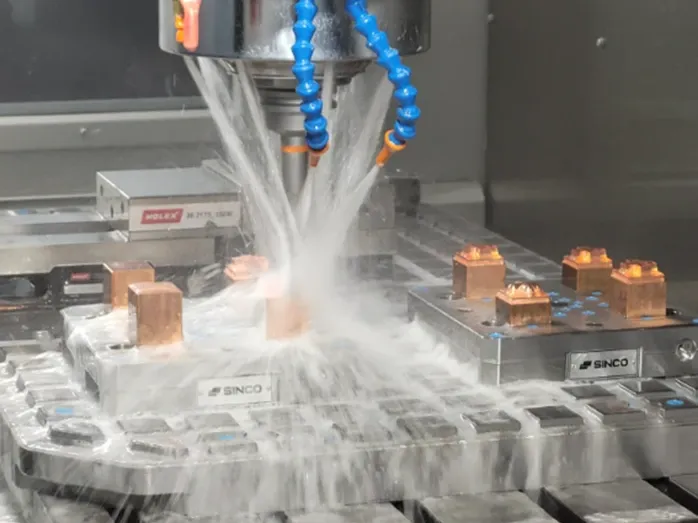
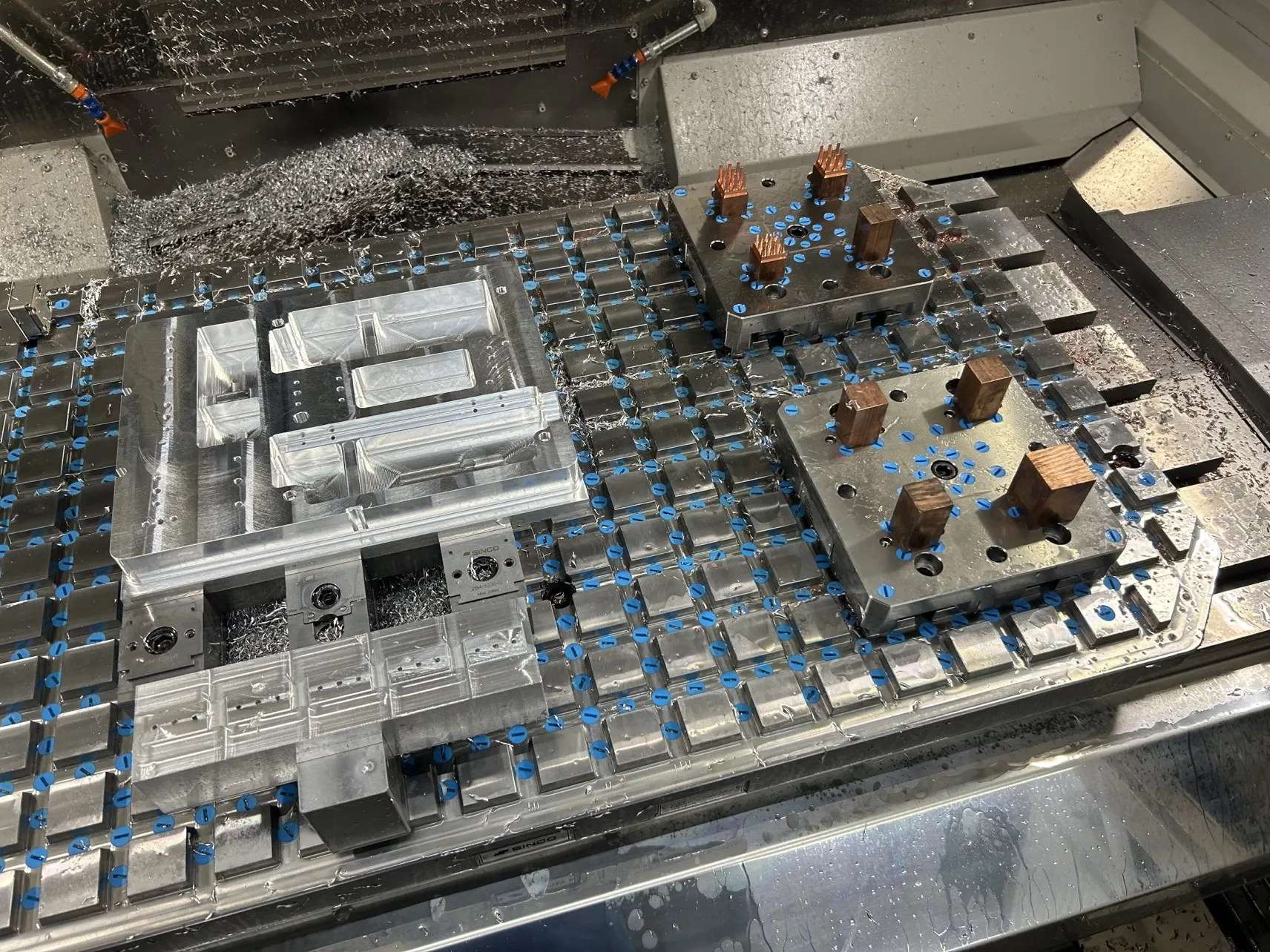
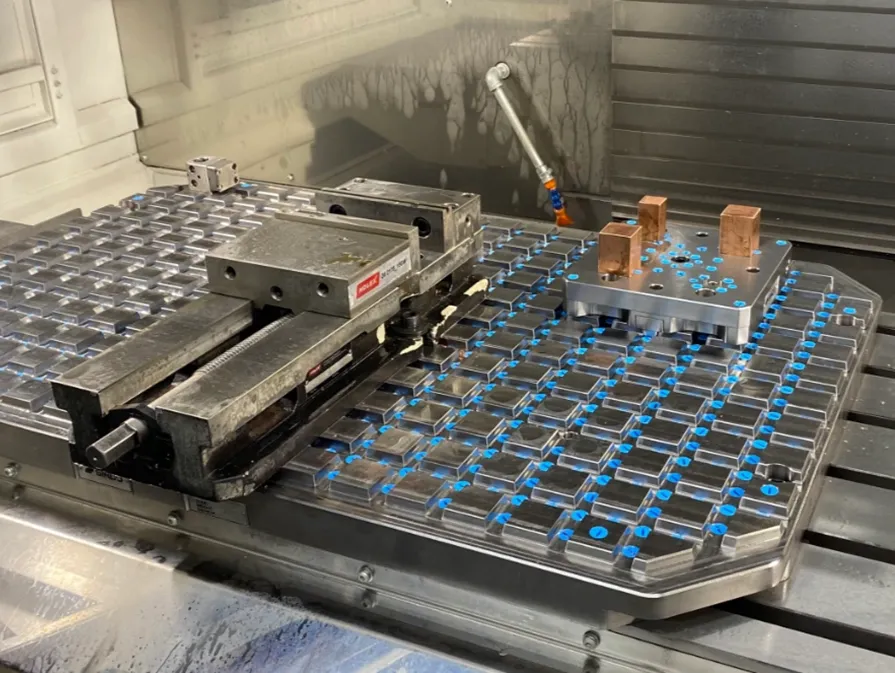
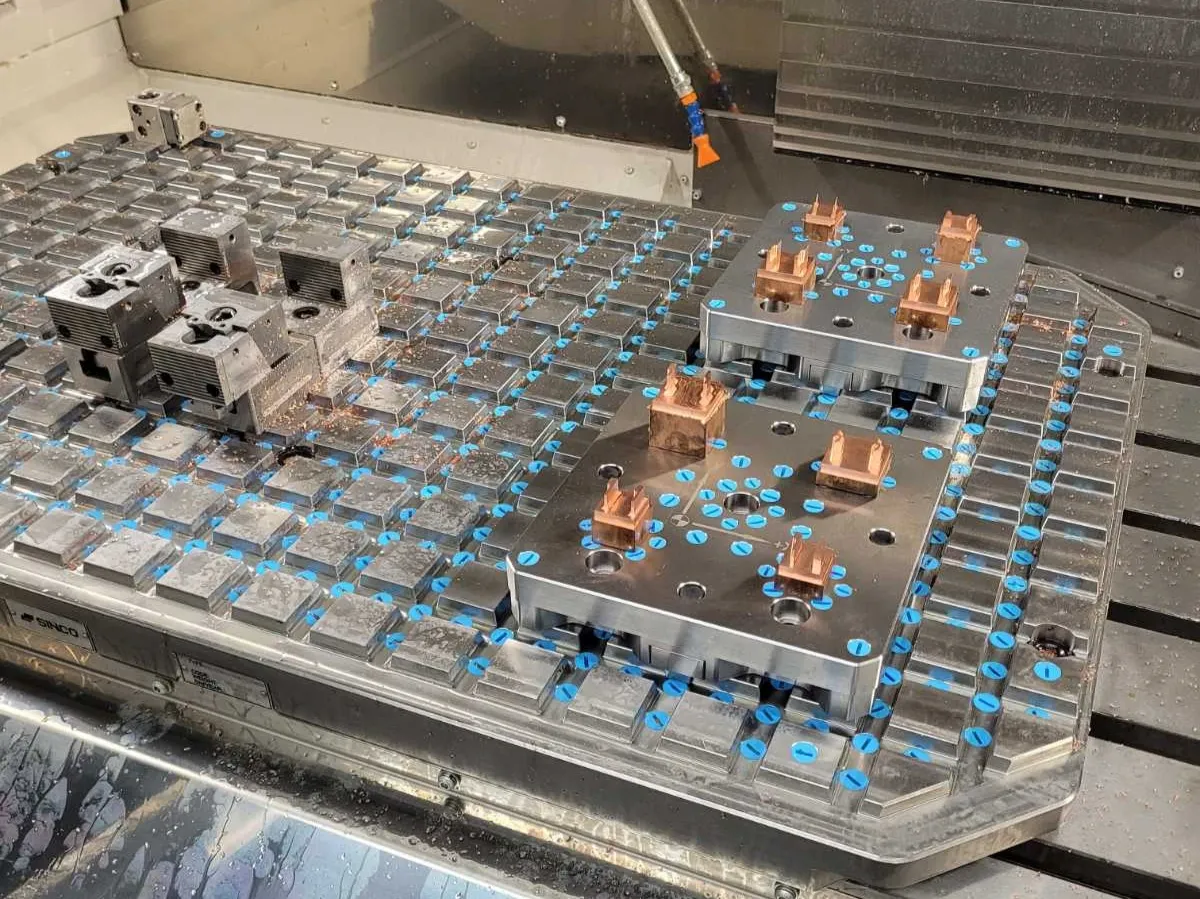
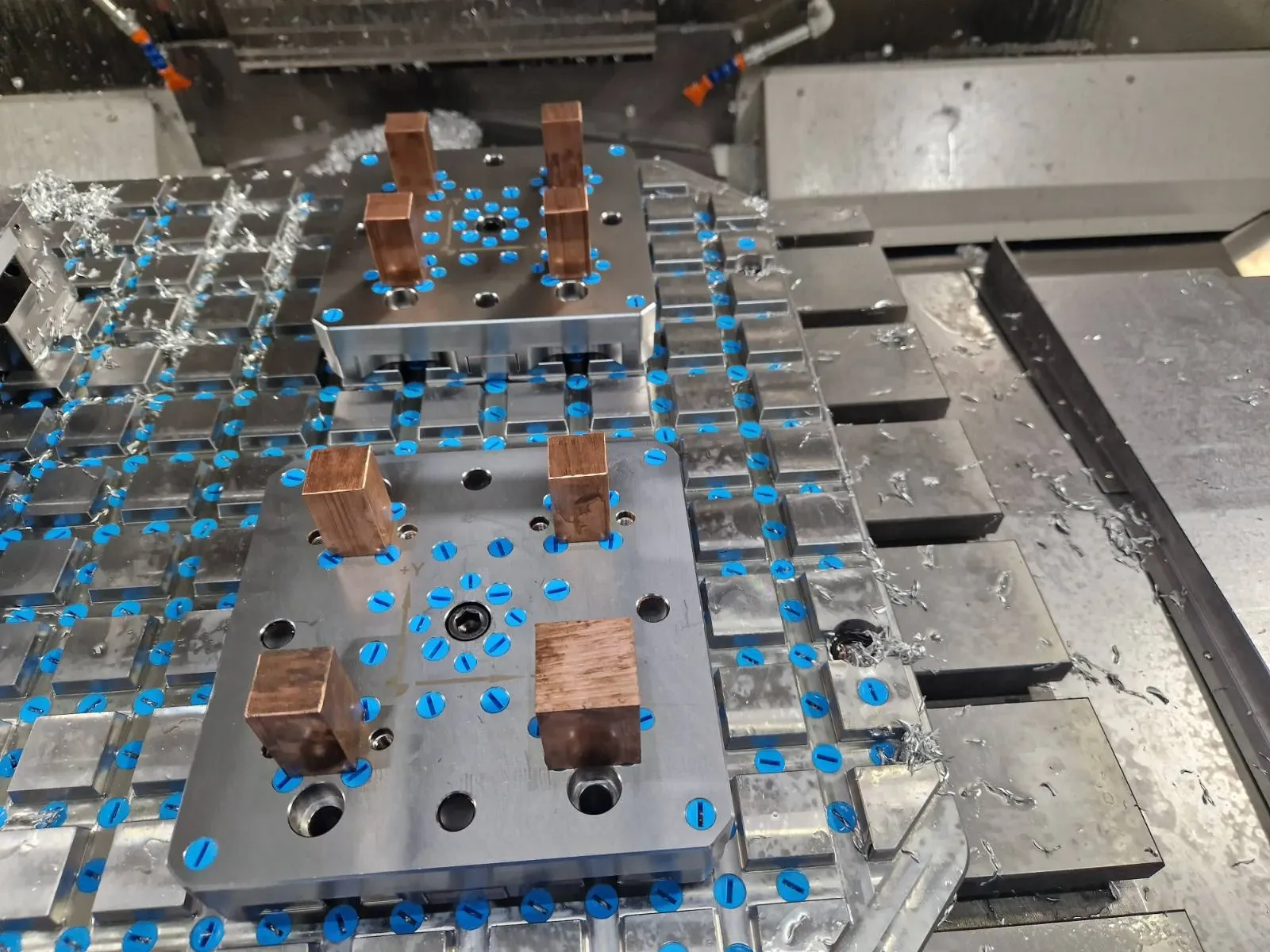
MultiZero Clamping System set-up used in one of the CNC milling machines at Marquardt North Macedonia.
Machining of multiple electrodes at once
Marquardt North Macedonia increased electrode milling productivity by 70–80%
Q: How many electrodes are you typically able to mill simultaneously using one EDM pallet?
A: We usually aim to fill the EDM pallet with four electrodes, as long as their size allows it.
Q: How has the usage of the EDM pallet affected your ability to handle multiple electrodes at once?
A: Previously, we used a custom-made plate that could hold two electrodes. With the EDM pallet, we can now handle four electrodes simultaneously. On some occasions, we even run two pallets overnight, processing up to eight electrodes at once. This has significantly boosted our productivity.
Q: How many electrodes are you producing on a weekly or monthly basis?
A: The number varies considerably. Sometimes we make 30, other times 50, depending on the reparations or new segments required during a given timeframe. We tend to focus more on the completion of jobs rather than tracking the exact number of electrodes produced.
Q: How has the EDM pallet impacted your overall productivity?
A: Productivity for electrode milling has increased by 70–80%. This improvement is closely linked to the rise in internal reparations and the overall number of tools we manage in-house.
Q: How does the EDM pallet ensure the accuracy and repeatability of the electrode milling process?
A: We use a specific torque force when screwing the electrodes in place. This ensures consistent accuracy and repeatability. After initial checks, we confirmed the system maintains its precision without requiring frequent verification.
Q: How integral is the EDM pallet to your production workflow?
A: The EDM pallet has become a critical part of our production process, especially for managing higher volumes of electrodes. It’s now considered standard equipment in our workflow.
Q: How adaptable is the EDM pallet to different types and sizes of electrodes?
A: The EDM pallet is highly adaptable. While we haven’t worked extensively with large electrodes, it can easily accommodate larger sizes by machining the holes for the pins and thread on the electrode side. Once prepared, it’s ready to use with the EDM pallet.
Q: Did you make any specific customizations to the pallet for electrode milling tasks?
A: No, the standard setup has been more than sufficient to meet our needs.
With the EDM pallet, we can manage four electrodes simultaneously – It has become a crucial part of our workflow.
A proven investment in clamping Innovation
By addressing Marquardt’s unique manufacturing challenges, the MultiZero Clamping System has delivered measurable improvements in efficiency, flexibility, and standardization. Its reliability, ease of use, and ability to streamline processes have made it a valuable investment for Marquardt North Macedonia.
Reflecting on the system’s value, Mr. Tashuli notes, “Even for unique part production like ours, it has transformed the way we work.”
For manufacturers like Marquardt, who balance custom machining with small batch production, MultiZero Clamping System offers a pathway to productivity, efficiency, and success.